Don Quijote Samurái
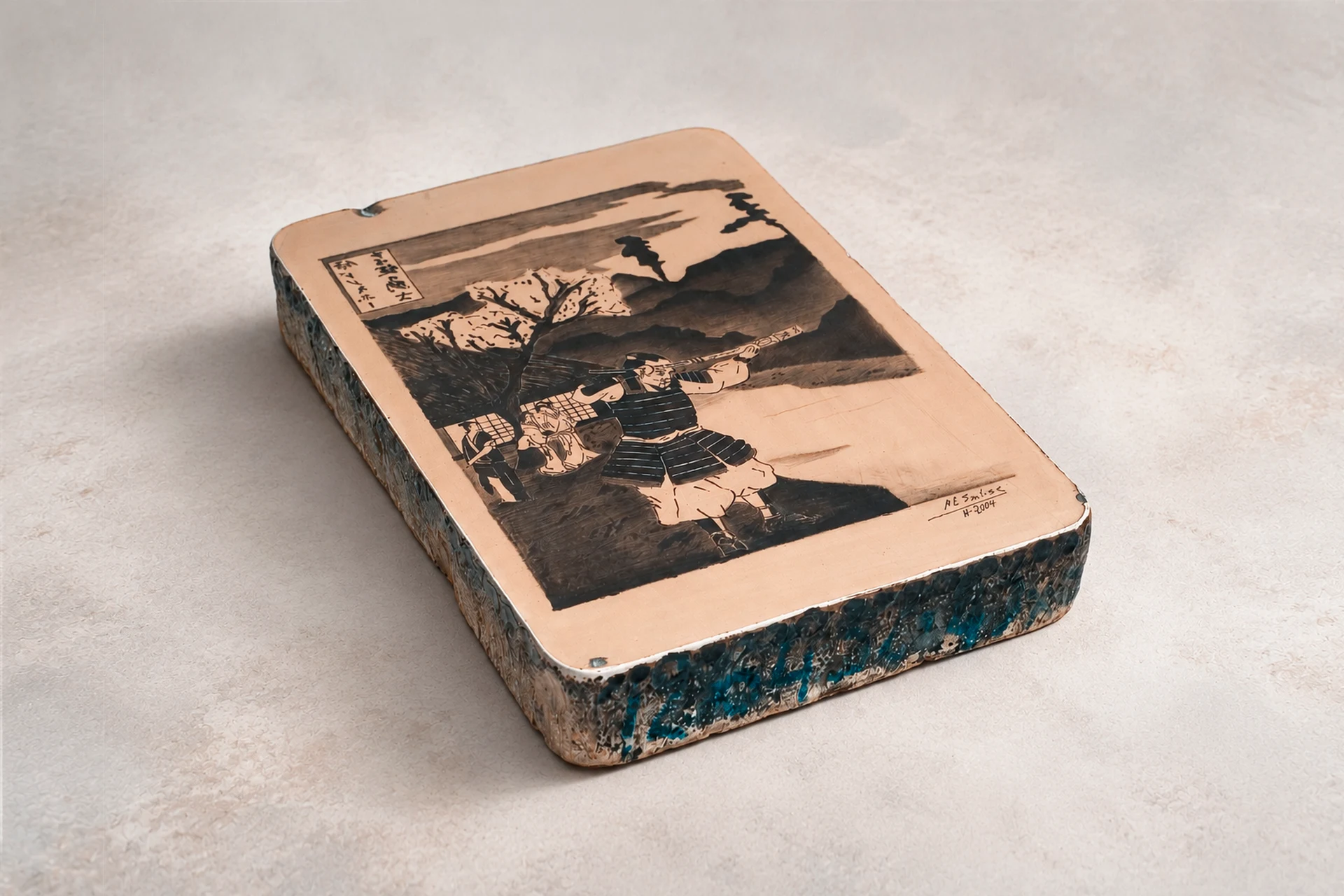
Stone lithography on Kelheim limestone, hand-coloured with watercolour · 2005

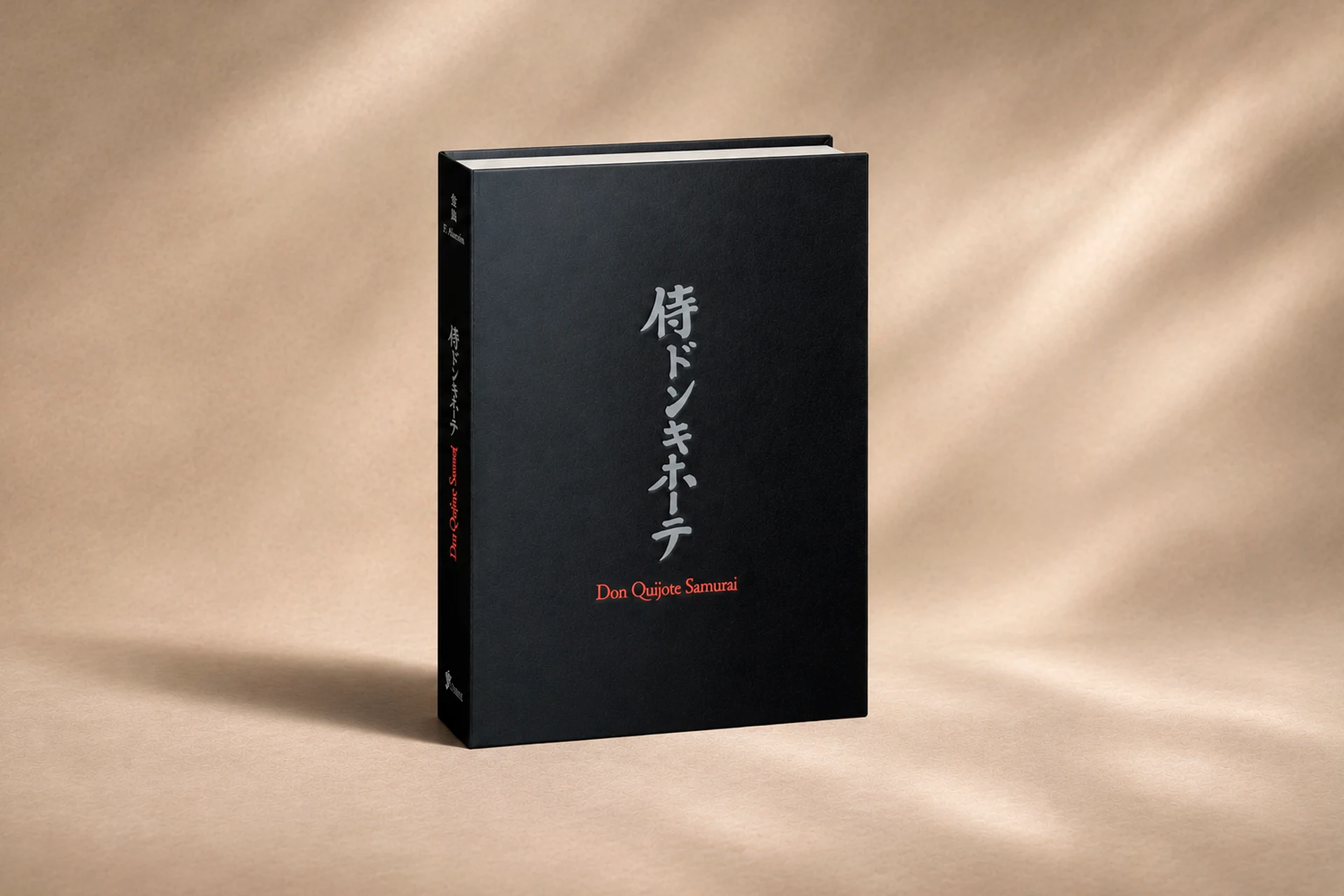
Stone lithography on Kelheim limestone, hand-coloured with watercolour · 2005
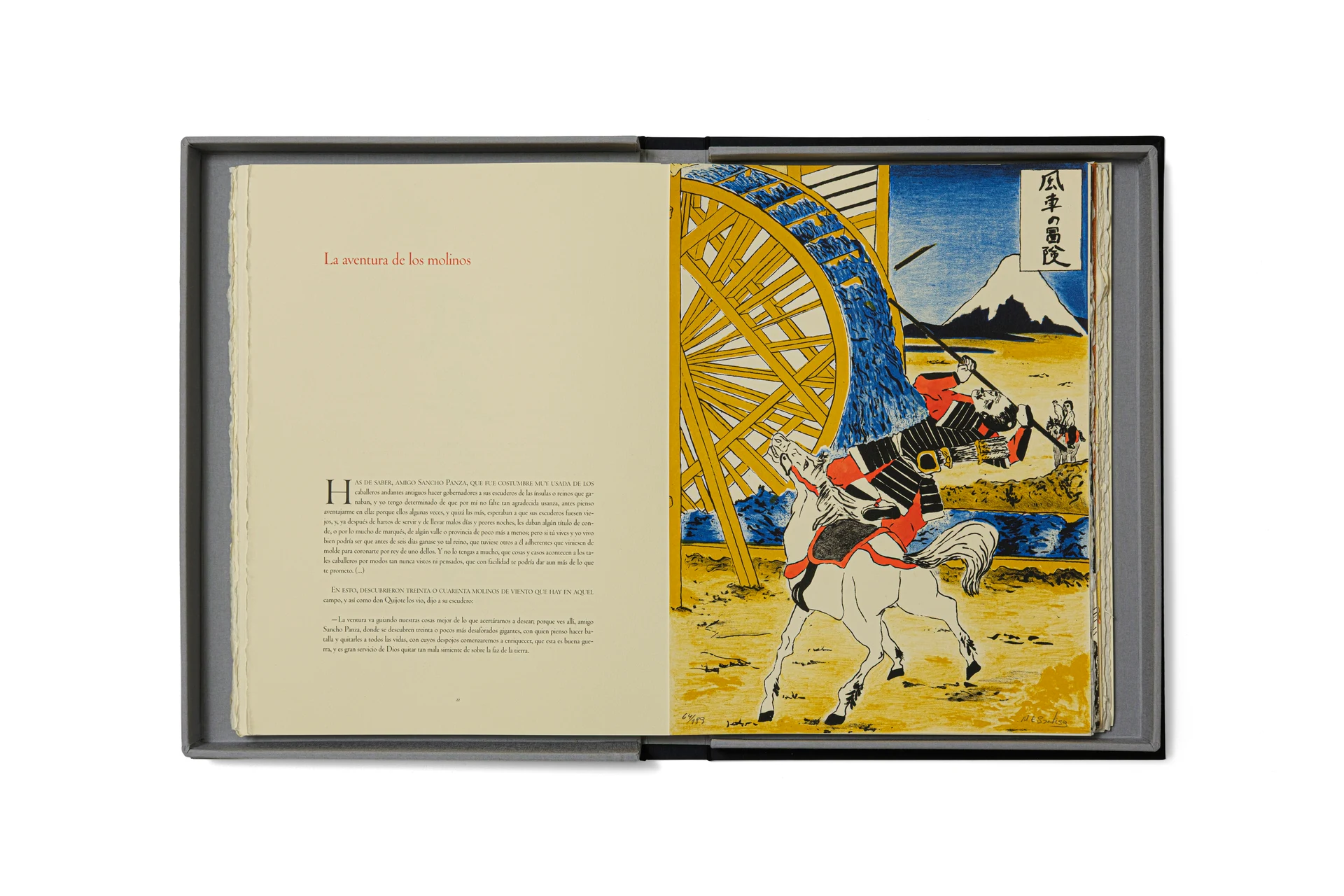
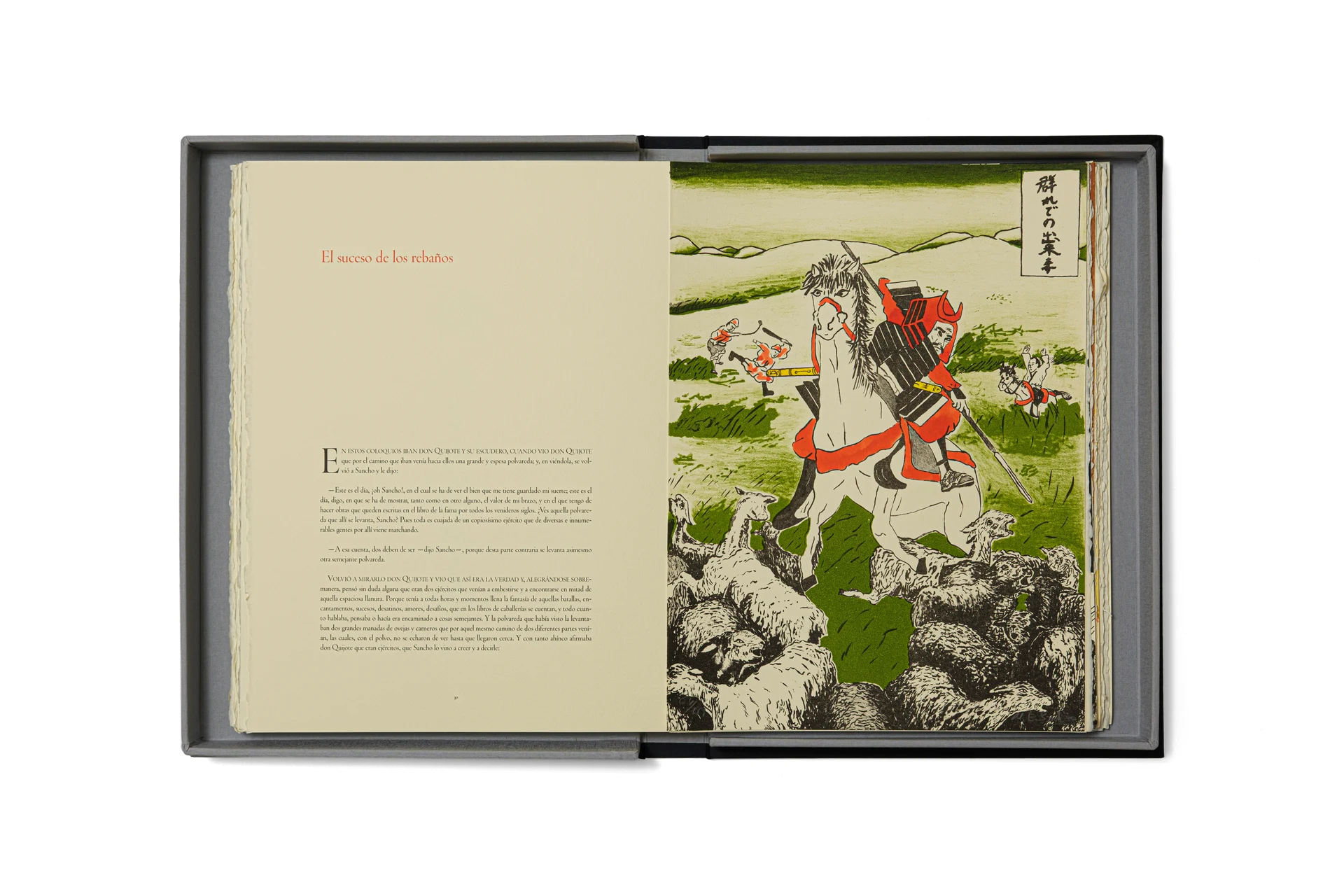
In January 1605, the first edition of El ingenioso hidalgo don Quijote de la Mancha appeared at Juan de la Cuesta’s printing house on Calle de Atocha in Madrid. Four centuries later, to mark the 400th anniversary of the publication of its first part (1605–2005), the knight from La Mancha embarks on an imaginary journey from the blazing sun of Castile to the Land of the Rising Sun, where he is transformed into a samurai warrior.
This extraordinary transformation draws on a surprising affinity between Western knights-errant and Japanese bushi, two chivalric traditions which, despite emerging in cultures separated by thousands of miles, existed during the same period and shared ideals of honour, loyalty, courage and duty. Beyond these parallels, Don Quixote’s journey to Japan reveals something essential: that the Knight of the Sorrowful Countenance can leave the roads of La Mancha behind, don the armour of a samurai and remain, at heart, the very same Don Quixote.
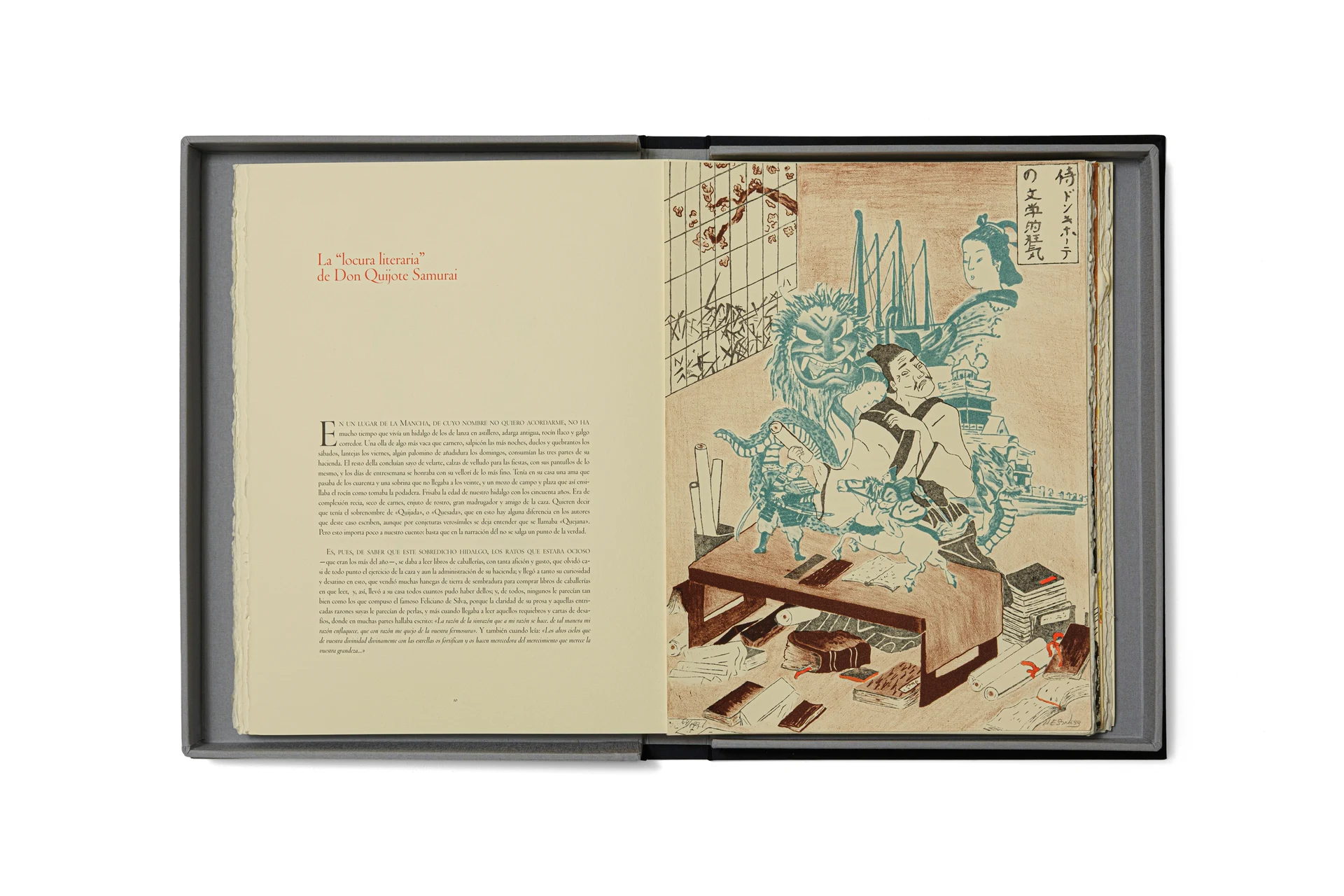
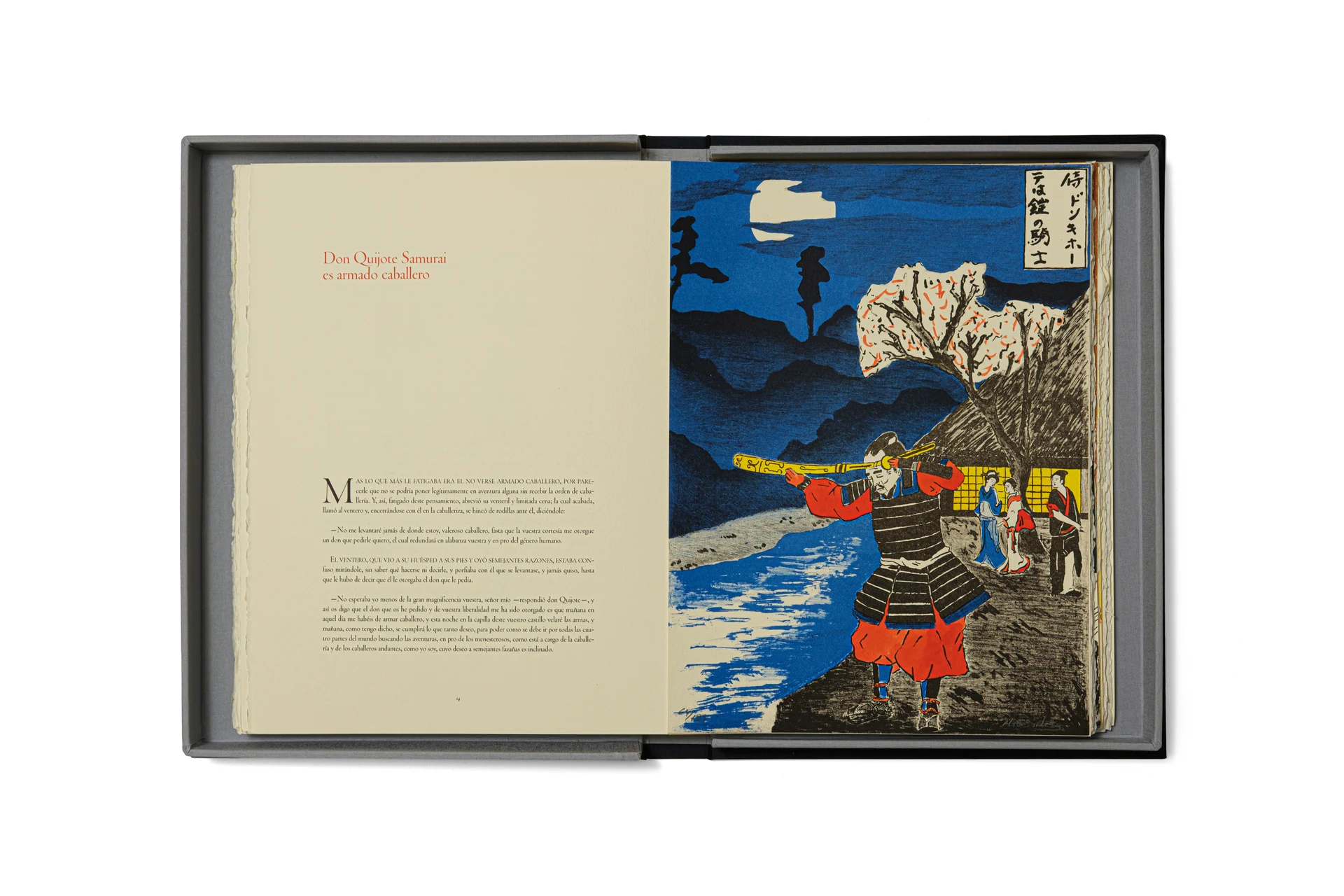
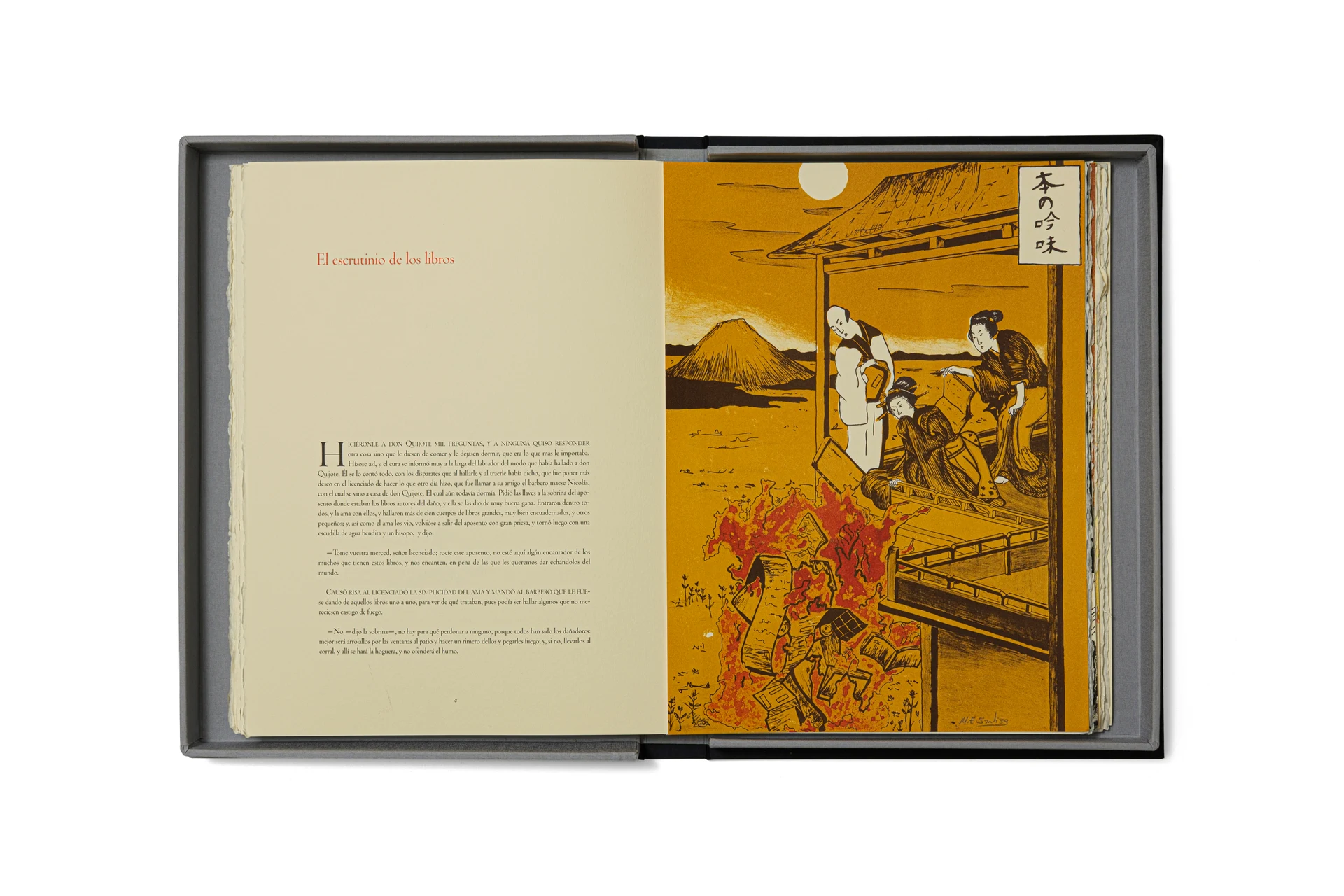
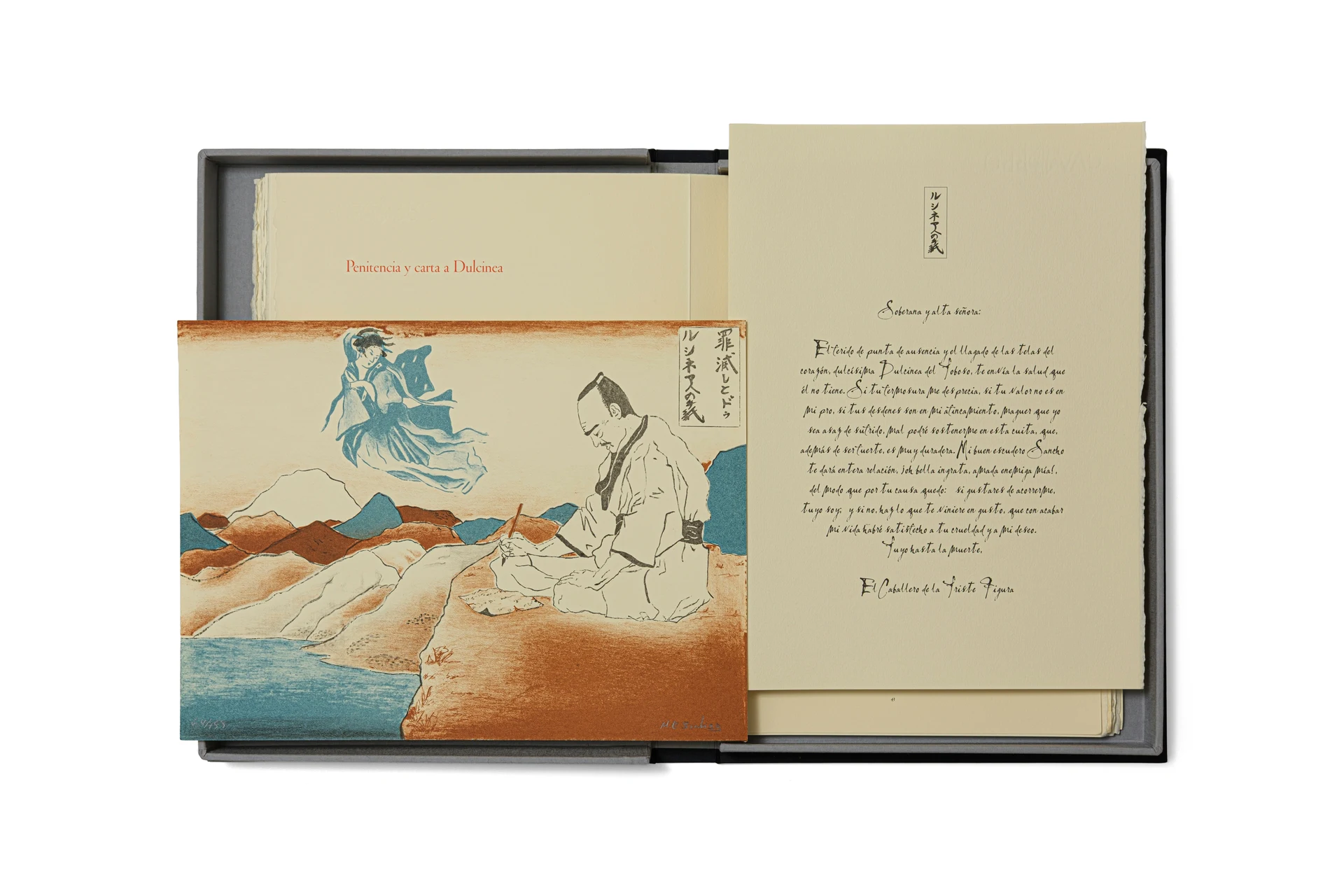
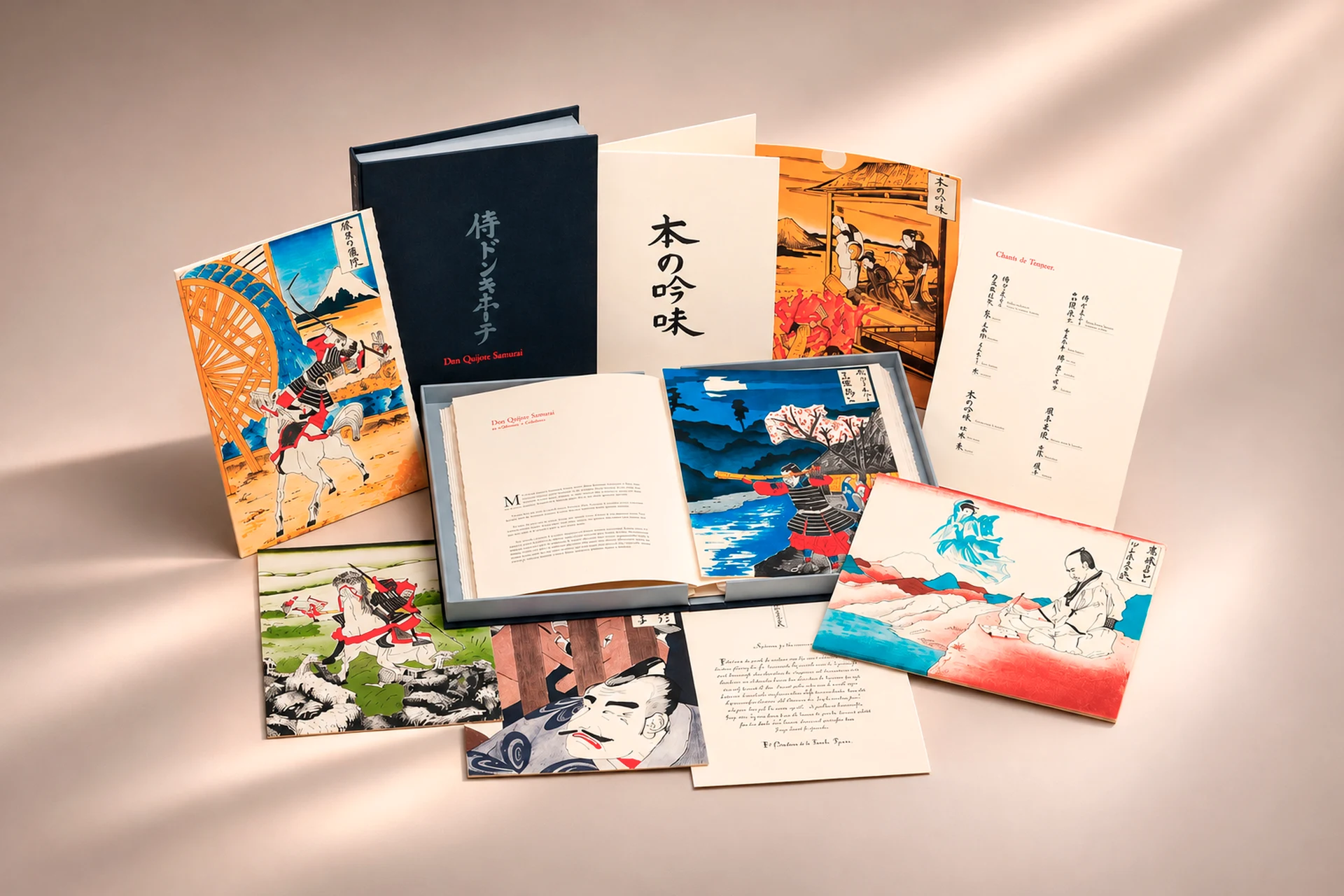
For this edition, María Santiso reimagined some of the most memorable episodes from the first part of Don Quixote, drawing inspiration from the Japanese tradition of ukiyo-e prints, images of the so-called ‘floating world’. The knight’s library becomes a Japanese interior; Don Quixote receives a katana as he is dubbed a knight; windmills become watermills under the influence of Hokusai; his encounter with the Biscayan is reimagined as a duel between samurai, while Dulcinea takes on the delicate appearance of a geisha.
The twelve lithographs were drawn by the artist directly onto Kelheim limestone and subsequently hand-coloured with watercolour, a meticulous process that lends each print its own distinctive richness of tone and colour.
We invite you to rediscover Don Quixote through an extraordinary lithographic journey from La Mancha to Japan.
Contact · Don Quijote Samurái
If you have any enquiry, please do not hesitate to call or write to us.
PremisesC/ Juan Duque, 12
28005 Madrid, Spain
Telephone91 559 60 25
670 777 808
WhatsAppWrite
Instagram@summaeditorial
Summa uses its own technical storage and, only if you accept, third-party cookies (Google Analytics) to measure visits. Cookie policy

